
Customer acquisition in banking in 2026: a strategic guide


If you’re a bank or credit union looking to improve customer acquisition, you’re likely feeling one or more of these pressures:
- A high cost of acquisition, whether measured in deposits or approved accounts
- Limited brand reach or reputation in a crowded market
- Trouble reaching high-value audiences without overspending to get there
- Over-reliance on one channel, usually paid search, that works but can’t carry the growth you need on its own
What’s changed heading into 2026 is how quickly those dynamics shift, particularly as AI-driven discovery starts shaping which brands even make a customer’s shortlist before a human ever compares options.
This guide covers the channels banks use to acquire new customers, with an emphasis on how affiliate marketing, done right, drives measurable growth without the compliance risk of doing it alone.
5 key takeaways
- The competitive financial landscape means standing out matters more than ever, and so does making it fast and easy for someone to open an account once they’ve found you.
- Build a solid foundation first: know your best customers, how they decide, and what you can afford to spend to acquire them.
- Use the right mix of channels, partnership marketing, digital ads, and email among them, matched to what actually works for your audience. A single-channel strategy is fragile.
- Affiliate marketing is a patient strategy, but one of the most effective for acquiring high-quality customers, especially as third-party trust increasingly shapes both human and AI-driven decisions.
- A financial services affiliate specialist like Fintel Connect builds that trust while handling content compliance, tracking, and reporting, so scaling your program doesn’t mean scaling your workload.
The challenges of acquiring new banking customers, and foundational tips to improve your strategy
Customer acquisition for banks and credit unions comes with challenges most other industries don’t face:
- High competition makes differentiating your institution difficult
- Strict regulatory requirements mean every piece of marketing has to be crafted carefully to stay compliant
- Potential customers are more cautious choosing financial products than most other purchases
- A more complex funnel demands a highly functional, engaging journey to prevent drop-off
Before investing in new tactics, define three things:
- Who you’re trying to acquire: your ideal customer, their intent, and where they already shop for financial products
- What counts as success: an approved application, a funded account, an activated card, not just a form fill
- What you can afford to pay: your target acquisition cost relative to lifetime value, and which channels can actually hit it
From there, four practical steps set your strategy up to succeed:
1. Know your audience: define your ideal customer and look at where competitors are advertising to understand the competitive landscape and where to start.
2. Define your customer journey: map how someone goes from hearing about you for the first time to becoming a customer. Understanding key touchpoints helps you reduce disengagement and improve the overall experience.
3. Optimize your onboarding: five minutes or less is the gold standard for account opening. Make the path obvious, especially on mobile, state fees and eligibility clearly, and include trust signals like FDIC or NCUA messaging and clear security language. Online and mobile channels are now preferred by 76% of consumers, more than eight times the 9% who prefer branch banking (ABA/Morning Consult, October 2025), so a frictionless digital path matters more than ever.
4. Know your budget: know what you can spend to acquire a new account holder, then track which channels deliver it most efficiently. A clear view of what’s working, and what isn’t, is your roadmap for refining your efforts.
If you’re a bank looking to promote credit card products, read our strategic guide on credit card acquisition.
Banking ideas to get new customers: 5 channels compared
Robust acquisition takes a blend of channels, since it typically takes multiple touchpoints before someone converts. Here’s how the five most common ones compare, and what to watch for as you plan for 2026.
1. Affiliate marketing
A growing number of banks leverage affiliate marketing by partnering with publications, influencers, podcasts, and other media to have your their products mentioned or promoted.
Pros:
- Reaches higher-intent, new-to-you audiences through the right publisher partnerships
- Builds trust and knowledge through educational content
- Increases credibility through strategic third-party endorsement
- Creates a brand halo effect that improves the cost-efficiency of your broader marketing
- Runs on results-based fee models, giving clearer ROI than most other digital channels
Cons:
- Takes time to ramp up. It isn’t a quick fix.
- Doesn’t work well in isolation, it needs to be part of a larger strategic effort.
- Managing and scaling it well takes the right tracking and reporting, or the right partner.
2. Offline channels
Direct mail, billboards, local sponsorships, community partnerships, and physical ad placements all fall here. Even some fintechs leaned on direct mail during COVID to stand out. It builds trust, but it’s expensive and hard to measure.
Pros:
- Builds local reputation and community
- Nurtures current customers and increases customer lifetime value (LTV)
- Reaches demographics less present on digital channels, with room to localize messaging
Cons:
- Difficult to track
- Not scalable
- Better suited to top-of-funnel awareness than a results-driven strategy
3. Programmatic ads
Digital ads placed across websites and social channels through platforms like the Google ad network.
Pros:
- Good for brand awareness and top-of-funnel targeting
- Easy to A/B test ad copy and messaging
- Captures a broad audience across the web
Cons:
- Digital ad spend can get expensive, and efficiency tends to drop as you scale
- Likely to reach a broader, lower-quality audience
- Ads can get lost in the mix or blocked outright
4. Paid search
Paying for ad placement on search results for a given query.
Pros:
- Targets high-intent consumers at the bottom of the funnel, so conversion rates can be strong
- Easy to A/B test ads
- Surfaces organic keyword opportunities
Cons:
- Increasingly competitive and expensive as more institutions bid for the same terms
- Hard to differentiate your brand from competitors
- Doesn’t build trust the way other channels can, which matters in banking decisions
5. Email
Effective for nurturing people already in your funnel, less so as a cold outreach strategy.
Pros:
- Segment audiences and reach them with targeted messaging
- Easy to A/B test directly from your email service provider
- Supports clear CTAs at different funnel stages
Cons:
- Purchased lists make lead quality hard to verify
- Cold emails are difficult to personalize and often underperform warm ones
- Good campaigns take real time and effort, plus a learning curve if you haven’t run them before
If you’ve covered the basics and want to push results further, affiliate marketing is a proven digital acquisition channel when it’s done correctly. It can add reach, build brand awareness, and lead directly to conversions.
Why affiliate marketing matters more in the AI era
AI-driven answers increasingly shape which financial brands make a customer’s shortlist before a human ever compares options, and those answers lean on a smaller set of trusted sources. Fintel Connect’s own research found that over 70% of AI-sourced financial content originates from affiliate publishers, not bank websites (Competing for Visibility in the Age of AI, Fintel Connect). That means affiliate marketing increasingly earns visibility in the places both customers and AI tools use to decide, not just direct conversions.
If you want the basics of getting started, read our guide, how banks can use affiliate marketing to acquire new customers.
| Channel | Best for | 2026 watch-out | Best practice |
|---|---|---|---|
| Offline / community | Trust and local reputation | Hard to measure, slow to iterate | Use as a trust layer, not your only growth engine |
| Programmatic ads | Broad reach, retargeting | Efficiency drops at scale, rising costs | Pair with strong landing pages and outcome tracking |
| Paid search | Capturing high intent | Competitive, expensive, crowded | Defend high-intent terms; diversify before you plateau |
| Nurture and activation | Doesn’t create net-new demand alone | Use to lift conversion and retention, not as a standalone acquisition engine | |
| Affiliate marketing | Trust-driven, comparison-based acquisition | Slower ramp, needs relationship management | Optimize to funded outcomes; choose a partner who enables compliant, well-informed affiliates |
How to increase customer base in banks: measurement and common mistakes
The fastest way to grow your customer base usually isn’t a new channel, it’s measuring the right thing and fixing what’s already leaking.
Measure outcomes, not clicks
This is also where customer acquisition cost for banks gets defined properly. CAC calculated against approved or funded outcomes, not applications, is the only version of the number worth acting on. Track:
- Cost per approved account
- Cost per funded account or funded deposit
- Cost per activated card
- Cost per funded loan
- Payback period and early retention indicators
- For partner channels specifically, performance by individual publisher, not just by channel, so you can double down on who’s actually driving quality
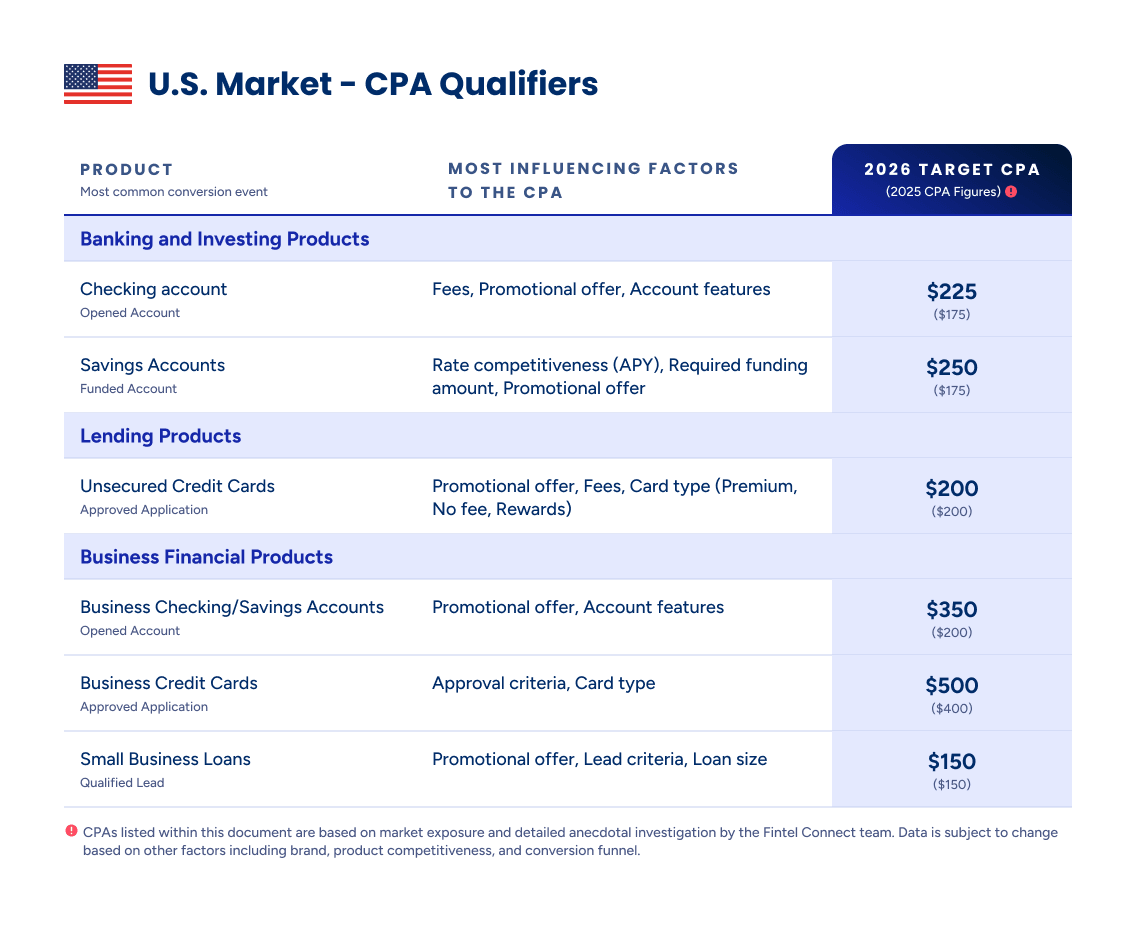
For real benchmark ranges by product type, see Fintel Connect’s 2026 financial affiliate cost per acquisition benchmark and strategy report.
Common mistakes that stall growth
- Over-optimizing one channel, usually paid search, until costs spike and growth plateaus
- Paying for the wrong event: applications instead of funded or activated outcomes
- Under-investing in onboarding and trust, which quietly kills conversion before a channel ever gets blamed
- Leaving partners without stable offers, accurate product details, or responsive support
- Treating acquisition as a series of campaigns instead of a system that compounds over time
How banks acquire customers through affiliate marketing with Fintel Connect
Fintel Connect is an all-in-one affiliate agency, partner network, management platform, and content compliance solution built for banks and financial services companies in Canada and the US. Here are three ways we help financial institutions find high-quality accounts, build reach, and hit acquisition goals.
1. A purpose-built platform that does the heavy lifting for banks
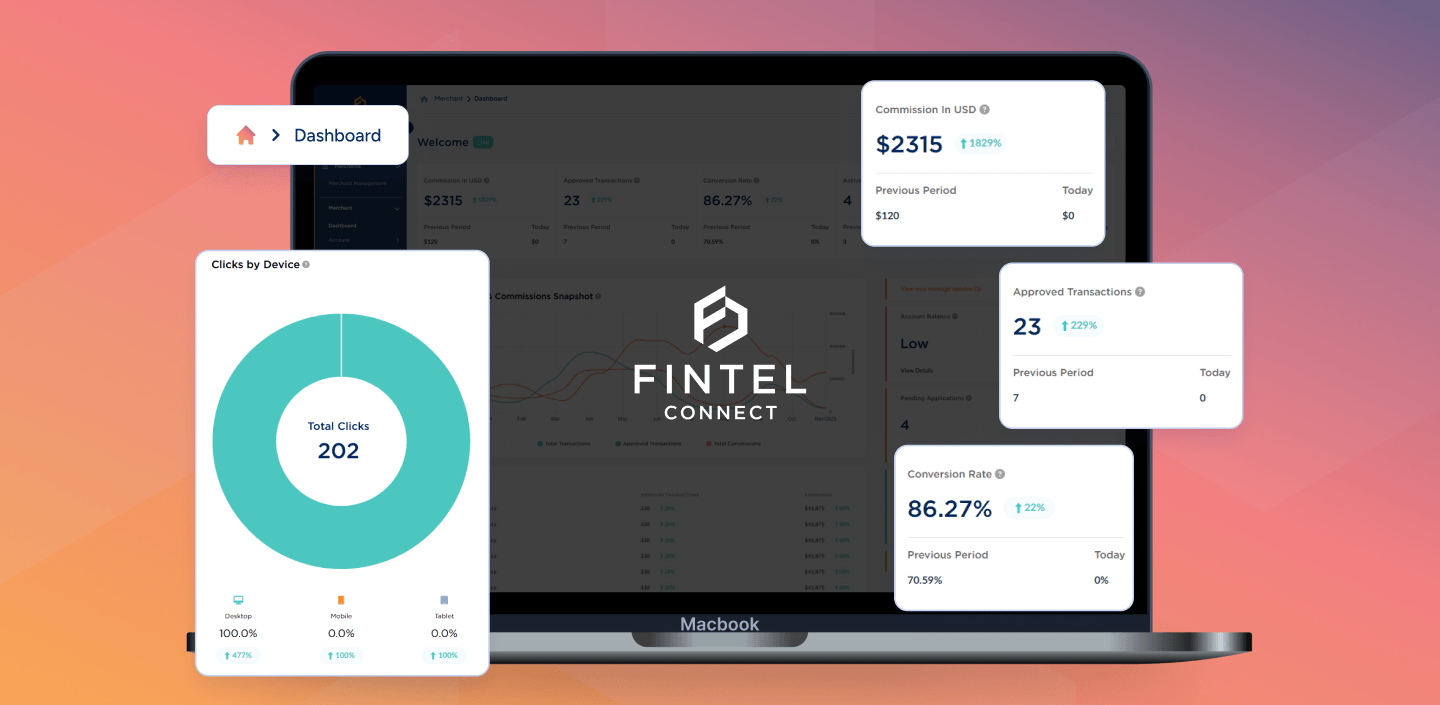
- Complex tracking and reporting built for how banks actually measure performance, approved and funded accounts, not just clicks
- Flexible commission structures across every product line
- Automated content compliance as rates and offers change, powered by an integrated tool like Fintel Check
2. A curated affiliate network built for banks
- Access high-traffic affiliate partners, including NerdWallet and Bankrate, that are difficult to reach without established relationships
- Get guidance on the right affiliates for your bank’s specific acquisition goals
- Build a diversified, performance-driven partner mix instead of relying on one or two large affiliates
2. An affiliate marketing agency that acts as an extension of your team
- Offload day-to-day campaign optimization, so your team can focus on strategy instead of maintenance
- Get product-level expertise across rates, features, and CPA targets specific to your offers
- Benefit from real-time investment adjustments based on market signals, not a monthly check-in
Customer acquisition in banking examples
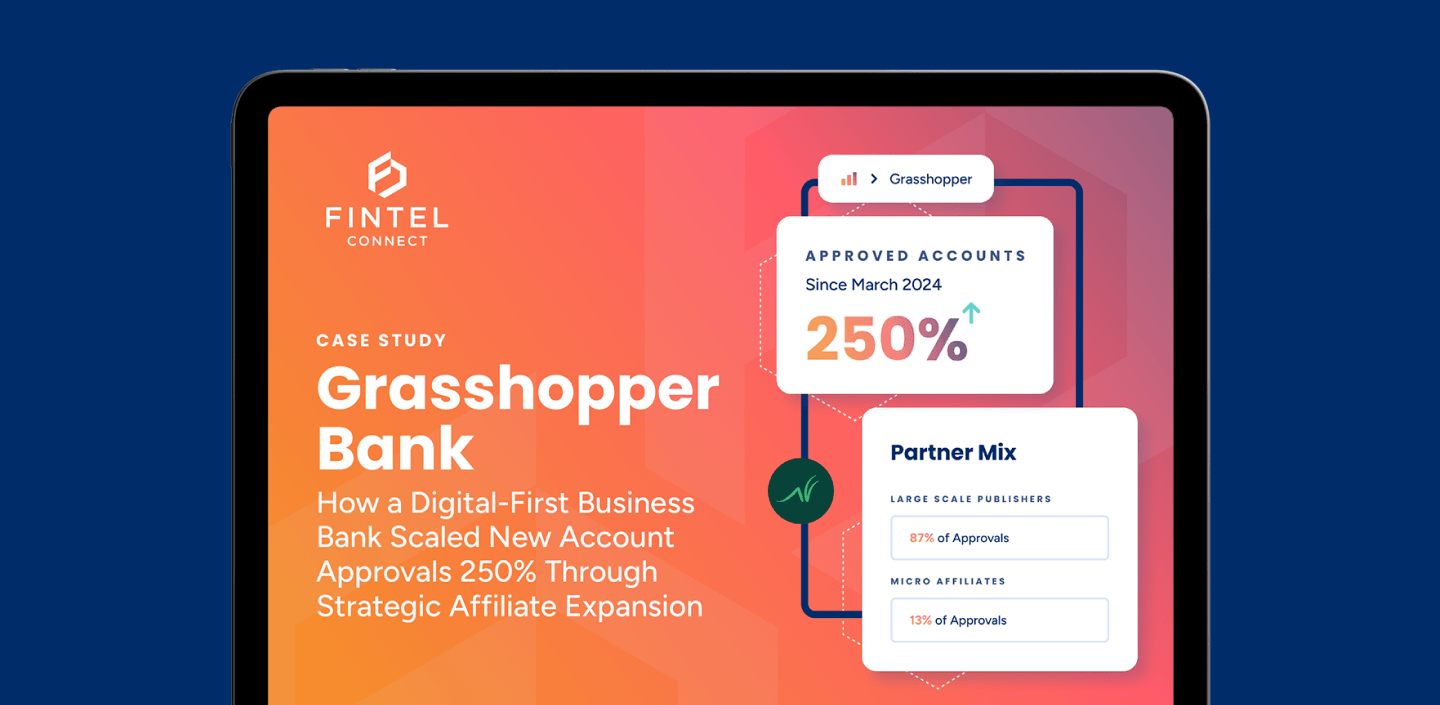
A few real results from banks and fintechs that scaled acquisition through affiliate marketing with Fintel Connect. Click to see the full case studies:
Building a customer acquisition engine that lasts
Customer acquisition in banking takes time, patience, and a breadth of marketing effort for a real engine to come together, not a single magic channel. The strongest programs pair a clean onboarding experience with a diversified channel mix, measurement tied to real outcomes, and trusted third-party distribution that keeps your brand visible where decisions get made, by people and, increasingly, by AI.
We know starting or scaling affiliate marketing with the right partner can make a significant difference, because we see it in our own customers.
FAQ
What is customer acquisition in banking?
Customer acquisitioneaningful outcomes, like funded accounts or activated products, not just applications or clicks, while navigating high competition, regulato in banking is the process financial institutions use to attract and convert new account holders. The strongest programs measure success against mry requirements, and cautious customers.
What is the best digital acquisition strategy for banks?
There isn’t one best strategy. Banks need a blend of channels tailored to their goals, from programmatic ads and paid search to email and affiliate marketing. Affiliate partnerships are particularly effective for building credibility and reaching high-quality audiences with measurable ROI, even though results take longer to show up than with paid channels.
What is customer acquisition cost for banks?
Customer acquisition cost (CAC) for banks typically ranges from $75 to $400 or more, depending on the product, the channel, and how established the brand already is. Affiliate marketing can offer a cost advantage through results-based fee models, compared to expensive offline channels or competitive digital advertising.
How long does it take to see results from affiliate marketing?
Affiliate and partnership programs usually build momentum over months, not weeks. They can become highly scalable once partnerships mature, but they’re rarely an overnight fix, which is why they work best paired with faster-moving channels early on.
How can banks lower customer acquisition costs?
The fastest levers are improving conversion, through faster onboarding and clearer trust signals, and measuring the right outcome, funded or activated accounts rather than applications. Diversifying beyond a single paid channel and investing in trusted third-party distribution both improve efficiency over time.
Why do affiliate partnerships help build trust?
Because they place your product inside environments customers already use to research and compare. That third-party validation tends to drive higher-intent traffic and stronger downstream performance than ads alone, and it’s the same trust signal that increasingly shapes AI-generated answers.



 English
  Français