
How banks, credit unions, and fintechs can scale digital growth in 2026


Scaling digital growth means growing revenue without growing costs at the same rate, and in 2026 that depends less on branch networks and more on affiliate partnerships, AI-driven discovery, and a handful of foundational digital capabilities. More than half of U.S. consumers now bank primarily on mobile, thousands of branches have closed, and digital-only banks are growing fast.
Scaling is the key to the meteoric rise of the best fintech startups. Banks that hope to replicate their success must start with a well-designed, scalable strategy for digital growth. In this article, we discuss the importance of scale, the fundamental prerequisites for digital scalability, and several innovative scaling strategies employed by leading-edge financial institutions.
What is the state of digital growth for U.S. banks, credit unions, and fintechs right now?
Digital is no longer a channel alongside the branch. For most consumers, it’s the primary way they interact with a financial institution, and the data shows how far that shift has gone:
- 55% of U.S. consumers now use mobile banking as their primary way to access accounts, the highest share since the American Bankers Association began tracking it in 2017, and 77% prefer managing accounts through mobile or computer over any other method (Bankrate, citing ABA 2024 data).
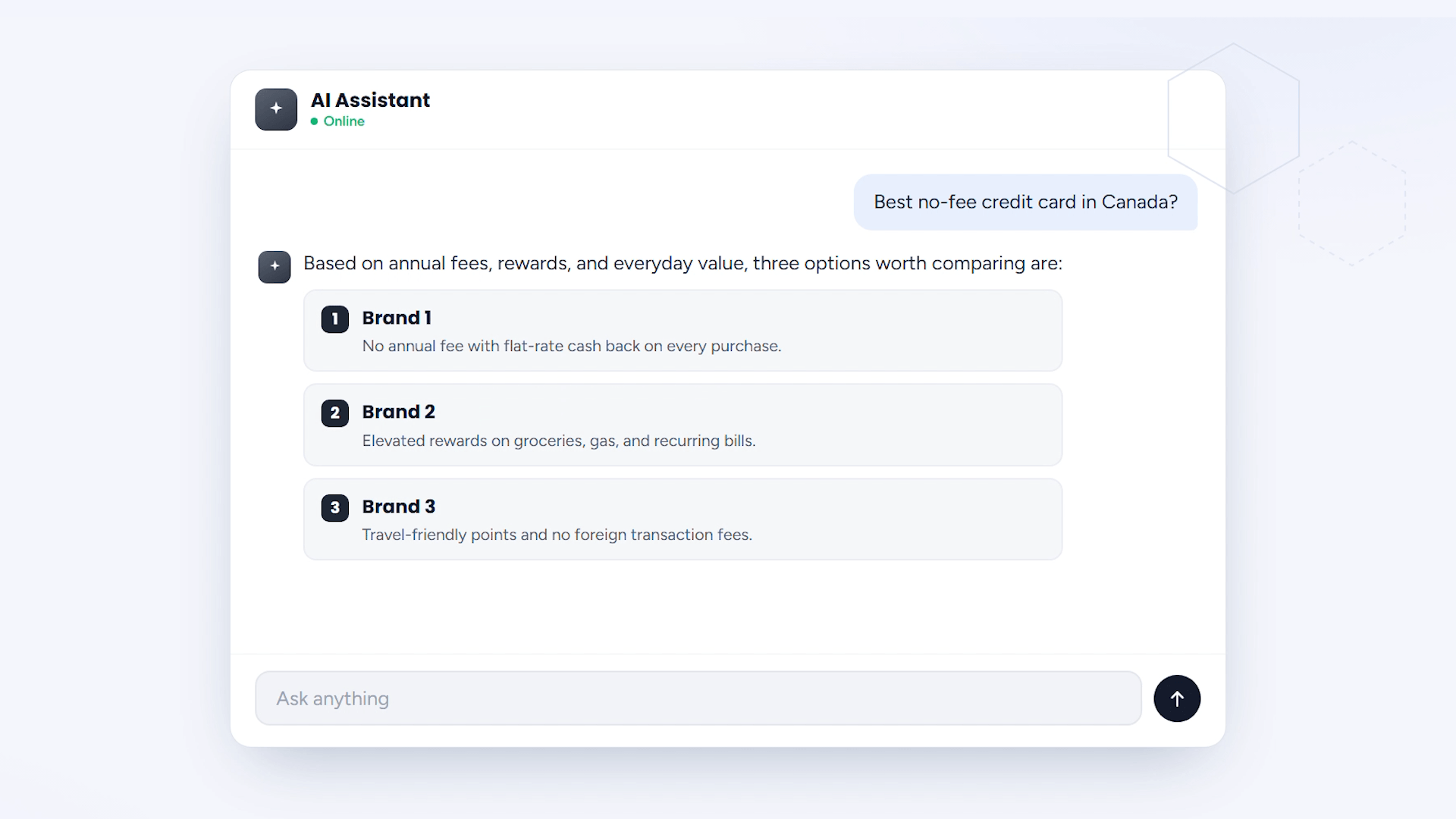
- Consumers are starting their research with AI, not a search bar. Over half of consumers already use generative AI tools regularly and expect their bank to offer comparable capability, a shift that’s changing where and how financial products get discovered (McKinsey).
- 80% of millennials and 72% of Gen Z prefer digital banking outright, and generational adoption is only getting more lopsided toward mobile-first (Bankrate).
- Branch footprints are shrinking fast. Roughly 9% of all U.S. branch locations, about 7,500 of them, closed between 2017 and 2021, with a third of those closures concentrated in low-to-moderate-income communities (National Community Reinvestment Coalition data, via Bankrate).
- Digital-only banks are growing quickly. Chime, the largest U.S. neobank, grew from 3 million active members in 2020 to 8.7 million in 2025, with revenue climbing from $80 million to roughly $2.1 billion over the same stretch, a nearly 27-fold increase (Business of Apps).
- Customer loyalty is eroding, which makes acquisition infrastructure more important, not less. Only 4% of new U.S. credit card and checking account customers stayed with their existing bank without shopping around in 2025, down from 10% and 25% respectively in 2018 (McKinsey Global Banking Annual Review 2025).
What’s the difference between growing and scaling digital distribution?
Growth and scale are often used interchangeably, but they aren’t the same thing:
- Growth is achievable by adding resources, capital or employees, that produce a proportional increase in revenue.
- Scale happens when revenue grows without a proportional increase in resources.
Scaling is what fueled the rise of the strongest fintech startups, and it’s available to banks and credit unions too. Financial products carry increasing returns to scale by nature: as a brand’s recognition grows, customer acquisition cost drops, and as a balance sheet expands and diversifies, cost of capital improves. Each new customer makes the next one a little cheaper to win and serve.
What’s changed is the infrastructure. Branches used to be the best distribution network in financial services. Today, that role belongs to digital channels, and increasingly, to the affiliate partners and AI platforms that sit between a consumer and their next financial decision.
What are the fundamental elements of digital scalability?
Before scaling digital growth, three foundational capabilities need to be in place. Skipping this step means a financial brand ends up scaling its problems along with its customer base.
How does omnichannel integration support scale?
Customers move between phone, email, live chat, mobile apps, social media, and branch visits, but the information collected at each touchpoint often stays siloed. That creates two costs: a worse customer experience (repeating information at every new touchpoint) and duplicated operational cost across channels.
An effective omnichannel architecture is built on:
- Multiple points of entry, one source of truth: customers get their choice of channel, but every touchpoint feeds a single system accessible across departments.
- Smart, automated contact routing: inquiries route based on urgency, complexity, cost to serve, and potential value, not a fixed script.
- An end-to-end digital experience: customers can apply, get approved, and self-serve day-to-day tasks (mobile check deposits, e-signatures, AI-enabled chatbots, automated authentication) without needing staff for routine transactions.
Institutions that get this right see it show up in the numbers: integrated channel experiences have been linked to doubled digital sales, tripled cross-sell rates, and a 40% boost in customer engagement (McKinsey research, cited by The Financial Brand).
How does automated personalization drive scale?
Personalization has moved from a nice-to-have to a baseline expectation, and it has to be automated to work at scale, since relationship managers alone can’t personalize a fully digital customer base. High-growth companies using personalization report meaningful, measurable returns: up to 40% more revenue, a 15% to 25% revenue lift, and 15% to 30% ROI improvement, with personalized calls to action converting up to 75% higher than generic ones (The Financial Brand).
Automated personalization doesn’t have to replace the human element; in wealth management, for example, AI can monitor self-directed investment behavior and surface recommendations for a relationship manager’s next client conversation, freeing staff to focus on the parts of the relationship that benefit most from a human touch.
Why are data analytics capabilities essential to scale?
Digital channels generate far more customer data than branches ever did, but data only becomes useful once an institution can capture, unify, and act on it. The most common barriers to doing that well are structural, not tactical:
- Technology gaps that keep data out of a single customer view
- Data that’s technically collected but effectively inaccessible
- Inadequate in-house skills to fully use available data
- Failure to standardize data across systems and departments
These are architecture problems, and they get more expensive to fix the longer they’re deferred. Building scalable, integrated analytics before ramping up digital growth is far cheaper than retrofitting it after the fact.
Why should affiliate marketing be the foundation of a digital growth strategy?
“Today, if affiliate partnerships aren’t part of your acquisition strategy, you’re leaving growth on the table.”
— Danielle Lauzon, SVP of Commercial Strategy at Fintel Connect
Of every digital growth lever available to a bank, credit union, or fintech, affiliate marketing deserves to be first, not last, on the list. It’s one of the most effective customer acquisition channels in financial services precisely because it borrows the trust of an established, independent voice (a comparison site, an editorial review, a finance creator) instead of asking a consumer to trust a brand cold.
But affiliate marketing only scales when it’s approached as a strategic discipline, not a commission line item. A few best practices worth building into any 2026 program:
- Treat financial affiliate cost per acquisition (CPA) as a business decision, not a fixed number. There’s no single “right” CPA. The right CPA supports your specific business goals, market conditions, and stage of growth, and it should be tied to a real conversion event (a funded account, an approved application) rather than a generic click.
- Fix the product and funnel before raising commission. A higher CPA can’t compensate for an uncompetitive rate, a clunky application flow, or a weak approval rate. Affiliates consistently prioritize products that convert well for their audience over products that simply pay more.
- Give affiliates a clear picture of your ideal customer. Demographics, behaviors, and priority segments (new-to-bank customers, cross-sell candidates, higher expected balances) help affiliates build more relevant content and target higher-quality traffic.
- Track performance past the initial conversion. Approval and funding rates, deposit balances or loan values, and customer quality over time reveal which affiliates and placements are actually driving business value, not just clicks.
- Treat affiliates as strategic partners, not just traffic sources. Share performance data, ask for feedback on where customers drop off, and reward the partners who consistently deliver high-quality customers with better terms or premium placement.
Product category matters too. Fintel Connect’s 2026 Cost Per Acquisition Guide, drawing on proprietary benchmark data across thousands of financial affiliate campaigns, found that 2026 target CPAs in the U.S. range from roughly $40 for a prepaid card to $500 for a business credit card, with checking accounts, savings accounts, and business banking products seeing some of the largest year-over-year increases as competition for premium affiliate placements intensifies.
How can credit unions scale digital growth?
Credit unions face a specific version of the digital scaling challenge: strong member trust and relationship history, but often thinner technology budgets than national banks. The data suggests where the opportunity is:
- Credit unions are more than twice as likely as community banks to prioritize digital account opening and onboarding as a top technology investment (CSI, 2026 credit union growth report).
- Nearly a third of credit unions name digital lending a top tech priority, compared with fewer than one in five community banks (CSI).
- There’s a real confidence gap to close: 78% of bank leaders trust AI-driven insights, compared to 59% of credit union leaders (CSI).
- The sector’s financial position is improving, with net worth ratio rising to 11.24% in Q3 2025 and net income up 21% year-over-year, which gives more credit unions room to invest in digital infrastructure (CSI).
For credit unions specifically, scaling digital growth means investing in digital account opening and onboarding first (since that’s where the biggest gap with community banks already exists), pairing it with an affiliate strategy that plays to a credit union’s strength on rate and member value, and closing the AI confidence gap with better internal data literacy rather than avoiding automation altogether.
See it in action
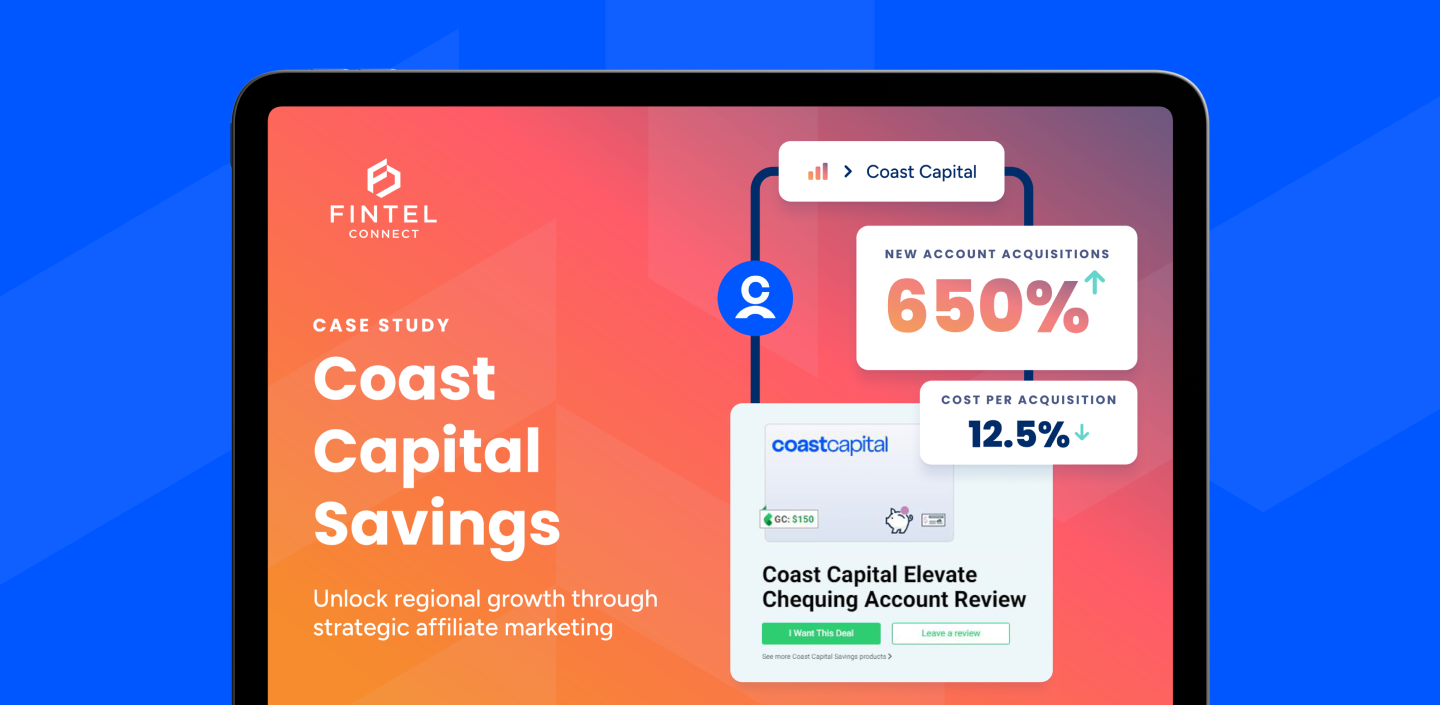
Compared to other channels, affiliates made up 18% of Coast Capital Savings’ new membership applications and they reduced CPA by 12.5% with targeted, data-driven strategies.
How can fintechs scale digital growth through bank partnerships?
Fintechs face the opposite constraint from banks and credit unions: strong digital experience, but no charter, balance sheet, or regulatory infrastructure of their own. The most scalable answer for many fintechs isn’t competing head-on with banks. It’s partnering with one.
Banking as a Service (BaaS) and embedded finance partnerships let a fintech “rent” a bank’s charter, balance sheet, and infrastructure while the fintech focuses on distribution and experience. This model is scaling fast on both sides of the partnership (PYMNTS):
- Fifth Third Bancorp’s BaaS platform, Newline, grew deposits by $2.1 billion in a single quarter (Q2 2026), with fee revenue up 35% year-over-year
- The Bancorp now generates 93% of its total deposits through fintech partnerships, with average deposits reaching $8.32 billion
- Roughly 79% to 80% of mid-market and smaller companies plan to upgrade their embedded finance capabilities within the next 12 months
For fintechs, scaling through a bank partnership only works if customer acquisition scales alongside it. That’s where affiliate marketing and a chartered bank’s compliance infrastructure both matter: a fintech can move fast on customer experience, but it still needs distribution that scales without a proportional increase in marketing spend, and content compliance monitoring that scales without a proportional increase in headcount.
Why does GEO matter, and how are affiliates gatekeepers to AI visibility?
Generative engine optimization (GEO), the practice of earning citations inside AI-generated answers from tools like ChatGPT, Gemini, and Perplexity, has moved from an emerging idea to a core part of digital growth strategy in under two years. The shift matters because of where AI platforms get their information.
- AI search favors already-trusted content. When a consumer asks an AI assistant something like “what are the best high-yield savings accounts,” the answer is typically built from comparison sites, editorial reviews, and expert recommendations, not bank homepages. That’s pushing financial brands to lean more heavily on affiliate partnerships as a way to earn visibility inside AI-driven results.
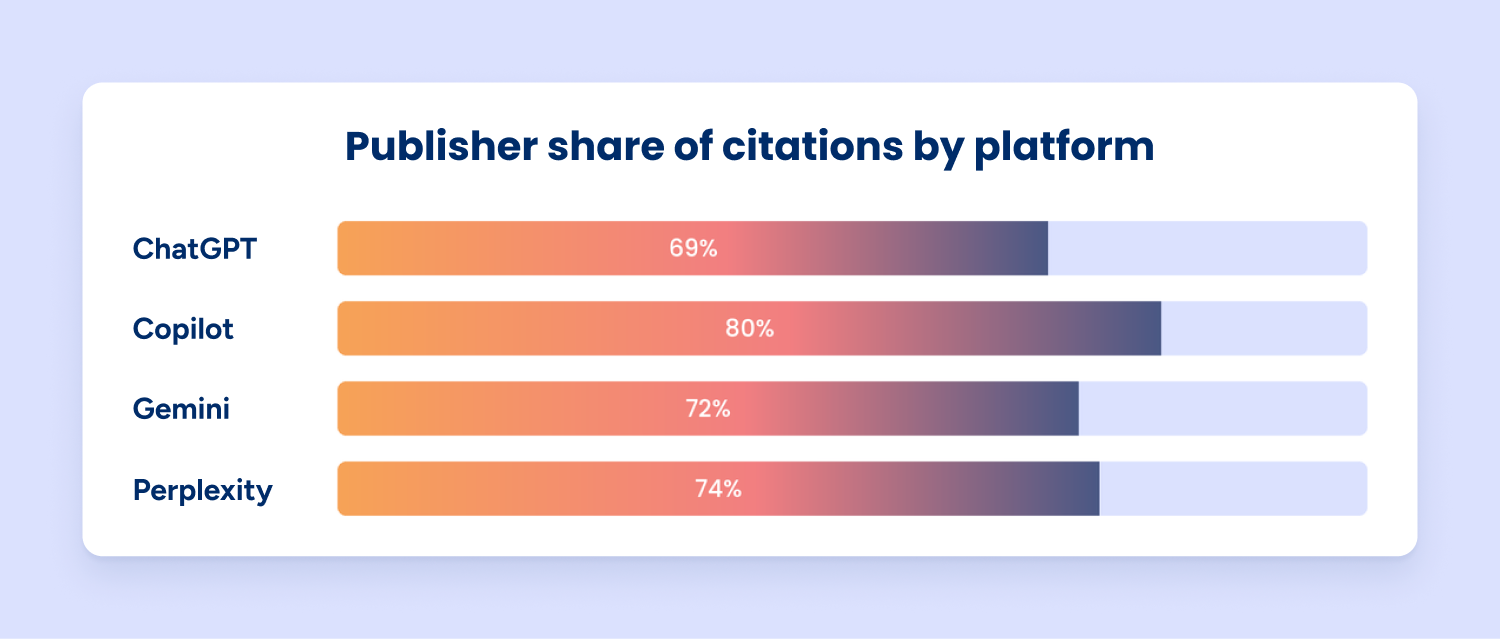
- Affiliate and publisher content is what feeds these models. Fintel Connect’s own research, Competing for Visibility in the age of AI, across major LLMs found that affiliate and publisher content, not owned brand content, most often supplies the sources AI platforms cite when recommending financial products, making affiliates the practical gatekeepers of AI visibility for most financial brands.
- The content that wins citations looks different from traditional SEO content. Affiliates earning AI citations are leaning on question-based headings, FAQ sections, comparison tables, and structured educational content that directly answers a specific question, formats that are easy for an AI system to extract and cite as a trusted source.
- Evergreen content compounds. Content built to answer a specific question keeps generating visibility long after a short-term promotion ends, which is a different return profile than a traditional paid placement.
The practical implication for banks, credit unions, and fintechs: a digital growth strategy that treats affiliate partnerships purely as a paid acquisition channel is leaving visibility on the table. Affiliate strategy and GEO strategy should be planned together, since the same content and placements that drive today’s acquisitions also shape whether a brand gets recommended in tomorrow’s AI-generated answers.
What are proven strategies for scaling digital distribution?
Once the fundamentals and affiliate foundation are in place, scaling becomes a matter of execution. Four strategies stand out:
1. Own the broader customer journey
Financial products are a means to a larger goal (buying a home, building a business, saving for retirement), yet many institutions focus narrowly on a single transaction within that journey. Digital channels make it possible to serve the full journey at low incremental cost.
One global bank built this into a long-term strategy around home buying: a companion app that let users photograph a house to see its estimated value, viewing times, and neighborhood sales history, plus a mortgage calculator and in-app loan application, delivered over 100% ROI within six months of launch, and became the foundation for an expanded suite of home-buying services with high-profile technology partnerships.
2. Monetize data responsibly
Banks hold data that other industries will pay for: demographic patterns, lifestyle preferences, and aggregated financial behavior. Digital channels make it easier to monetize this responsibly and legally. Aggregated, anonymized transaction data has helped commercial customers identify trade patterns and site new locations, and identity-verification networks built on bank credentials have turned secure authentication into a source of new customer access rather than just a cost center.
3. Build a digital financial supermarket
Comparison and marketplace platforms already dominate large parts of digital financial services distribution, earning affiliate fees for referring approved customers. Banks and credit unions have an underused advantage here: proprietary customer data and an existing frontline workforce that fintech marketplaces don’t have.
4. Rent out back-end infrastructure
Not every institution needs to compete on front-end experience. Banks with strong balance sheets and regulatory infrastructure but limited digital product development capacity can rent that infrastructure to fintechs instead.
This works because digital-first lenders often outperform banks on customer experience (fintech and digital bank NPS scores like SoFi’s 90 dwarf the traditional banking average of 30, and several major banks score in the single digits, according to CustomerGauge’s 2026 financial services NPS benchmarks) but lack the balance sheet and charter to scale funding on their own.
How do you get started scaling digital growth in 2026?
Before layering on new strategies, verify the foundation is in place:
- Customer experience that’s integrated across every channel, with one source of truth behind it
- Personalization automated across customer journeys, not dependent on staff bandwidth
- Analytics that give a unified, trustworthy view of customer activity
- An affiliate program with a clearly defined CPA strategy, tracked past the initial conversion
- A GEO/AEO strategy planned alongside affiliate strategy, not bolted on afterward
Once that foundation is verified, prioritize strategies based on your institution type: digital account opening and lending for credit unions, a bank partnership strategy for fintechs, and journey ownership, data monetization, marketplace positioning, or infrastructure partnerships for banks with the scale to pursue them.
Fintel Connect connects banks, credit unions, and fintechs with a curated network of 6,000+ affiliate partners, and helps build visibility in AI-generated answers through dedicated GEO services.
Frequently asked questions
What’s the difference between growing and scaling a digital distribution strategy?
Growth adds resources (capital or employees) to produce a proportional increase in revenue. Scaling grows revenue without a proportional increase in resources, which is why digital and affiliate channels, not branch networks, are the primary path to scale in 2026.
What are the fundamental elements of digital scalability for a bank or credit union?
Three capabilities need to be in place before scaling: omnichannel integration with a single source of customer truth, automated personalization across digital journeys, and unified data analytics that can turn customer activity into action.
Why should affiliate marketing come first in a digital growth strategy?
Affiliate marketing borrows the trust of an established, independent voice instead of asking consumers to trust a brand cold, and affiliate content increasingly feeds the AI platforms consumers now use to research financial products, giving it influence over both traditional acquisition and AI visibility.
How can credit unions scale digital growth differently than banks?
Credit unions are more than twice as likely as community banks to prioritize digital account opening and onboarding, and nearly a third name digital lending a top technology priority, suggesting the highest-leverage investment for most credit unions is closing those specific digital gaps rather than competing broadly with national banks.
How do fintechs scale digital growth without a banking charter?
Most fintechs scale by partnering with a chartered bank through Banking as a Service or embedded finance arrangements, renting the bank’s balance sheet, charter, and content compliance infrastructure while focusing their own resources on distribution and customer experience.
What is GEO, and why does it matter for financial brands?
GEO (generative engine optimization) is the practice of earning citations inside AI-generated answers from tools like ChatGPT, Gemini, and Perplexity. It matters because AI platforms tend to cite already-trusted affiliate and publisher content over brand-owned content, making affiliate visibility a practical requirement for AI visibility.
Are affiliates really gatekeepers to AI visibility?
Largely, yes. Research shows affiliate and publisher content most often supplies the sources AI platforms cite when recommending financial products, so a financial brand’s affiliate strategy has a direct effect on whether it gets recommended in AI-generated answers.
What’s a realistic customer acquisition cost (CPA) for financial products in 2026?
CPA varies widely by product and conversion event; Fintel Connect’s 2026 benchmark data shows U.S. target CPAs ranging from around $40 for a prepaid card to $500 for a business credit card. There’s no single right number: the right CPA reflects your product’s competitiveness, the conversion event you’re paying for, and the customer value you’re trying to acquire.
How can banks compete with faster-growing digital-only banks?
Rather than competing purely on digital experience, where neobanks like Chime already have scale advantages, many banks are more competitive positioning themselves as infrastructure partners (renting balance sheet and charter to fintechs) or building a broader digital financial supermarket around their existing customer data and workforce.


 English
  Français