
How Affiliate Marketing Creates a Brand Halo Effect for Financial Services Firms


If you’re running an affiliate marketing program for your bank or fintech you may be overlooking the extra power partnerships can bring to your financial brand. The halo effect.
This is the positive impression potential customers have of your brand when they realize your product or service can solve their problems or address their needs.
Yet we see many financial services companies underestimate this benefit and the role affiliates play in creating it simply because they struggle to measure its influence.
Our 20+ years of experience with financial publishers and affiliates gives us first-hand insights on the lesser known benefits of partnership marketing, like strengthening a brand’s market position and lowering their overall acquisition costs.
In this article, we’ll share these insights and cover:
- Key takeaways
- Why the halo effect matters in affiliate marketing
- How to measure the halo effect in your affiliate program
- 3 ways to nurture the brand halo effect with your affiliate program
- How one credit card issuer realized the strength of their halo effect
- What to keep in mind when using partnership marketing to achieve a brand halo effect
- When it makes sense to aim for the halo effect
If you are a financial services brand interested in seeing more out of your affiliate program, contact Fintel Connect today.
Key takeaways
- Affiliate marketing isn’t just about driving immediate net new customers. It also creates a halo effect that boosts your financial brand’s credibility and trust.
- The halo effect enhances free exposure and reinforces other marketing channels, leading to a more effective and cost-efficient marketing strategy.
- By tracking impressions, organic search performance, and user journeys you can quantify the halo effect that your affiliates create.
Why the halo effect matters in affiliate marketing for financial brands
Many banks and fintechs see affiliate marketing as just another lower-funnel acquisition channel—mentions on partner sites that drive customers to your product.
While affiliate marketing is an effective tactic in the consideration stage of a consumer buying journey, it can deliver three key benefits that go beyond hitting acquisition goals:
1. Free exposure
While your target audience may be searching for financial information, they may not always be ready to buy your product or even aware they need your product.
Affiliate marketing can bridge this gap by enabling trusted sources to educate your audience on how your product can solve a problem they didn’t know they had. You can get in front of new audiences, who may not have otherwise engaged with you, through authoritative outlets and trusted online personalities with a loyal following.
This expanded reach and awareness can benefit you (as we’ll see below) even if those users don’t immediately convert, or don’t convert directly through the affiliate placements.
2. Enhanced credibility through trusted sources
Endorsements from trusted sources can create and foster positive brand recognition for your financial institution or fintech.
This is especially powerful in banking, insurance, investment, and lending, where trust plays a crucial role. Unlike buying everyday items, choosing a financial provider feels risky for customers as they are trusting a company with their future economic wellbeing.
Consumers may take weeks or months to research, consider options, and get word-of-mouth advice before reaching a decision. And this feeling only increases when comparing a lesser known financial product to one from an established financial brand. You must clear a higher bar to earn their trust.
Publishers, influencers and affiliates let you build this credibility and trust among your target audience over weeks and months, influencing future purchasing decisions. Affiliate marketing can even address negative perceptions by providing positive, educational content, which helps to counter any misconceptions or skepticism.
Partnership marketing creates these effects because it can operate across different types of mediums and content, expanding your reach and reinforcing your other digital marketing campaigns (which we’ll get into next).
3. Increased performance and cost effectiveness of other digital channels
Partnership marketing can make your entire marketing strategy more efficient. While the cost of running an affiliate program can seem more steep than other channels, you’re typically only paying for the results—whether that’s new savings-account sign ups, loan approvals or issued credit cards.
What you’re not paying for is the increased exposure and credibility or the boost it gives your other channels.
By nurturing your target audience through trusted partners, you make them more likely to convert through other channels, like paid search and display ads, when they’re ready. Because financial decisions are rarely driven by a single channel or campaign, consistent brand exposure across multiple channels boosts consumer confidence.
A well-managed presence makes a brand feel familiar, reputable and, ultimately, a safer choice for your potential customers. This extended effect is more cost efficient for you in the long run.
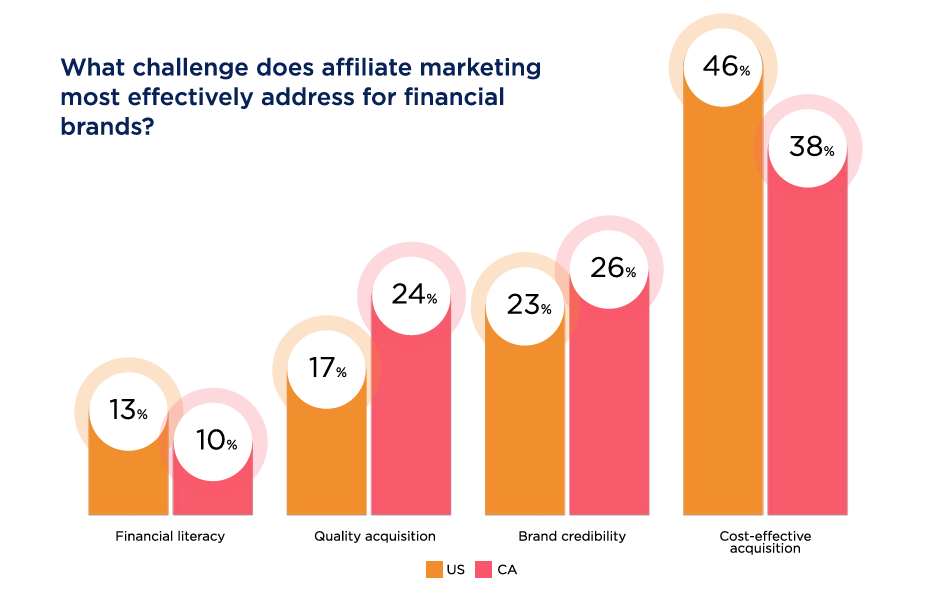
Affiliate marketing can help balance your overall marketing spend and make your efforts more cost effective across your channels.
An example of how these affiliate marketing benefits work together to create your halo effect
Imagine a personal finance blogger writing an article about 10 Ways to Save Money on Everyday Expenses. Within the article, they mention your financial planning app as a tool that helps track spending, set budgets, and identify where to cut costs.
Most readers may not have been actively searching for a budgeting app, just for ways to save. But, through the blogger’s educational content, they become aware of a need and of your product’s value. Even if you don’t receive immediate conversions, your brand has received an endorsement from a trusted source and gained exposure and credibility in a relevant context.
When some of those initial blog readers are ready to buy, they may come back to the blogger’s site and convert there, while others go through different channels, like via a paid ad, because they recognized your brand name. And others will convert through different channels, even via your website, but only after having seen your brand mentioned multiple times in:
- The original article they read
- Display ads
- Educational content via your website and product landing page
- A YouTube video created by a lifestyle influencer
These customers ultimately choose your product not always because of a specific campaign, but because it was top of mind in a variety of places thanks to affiliate marketing’s halo effect.
How to measure the halo effect of your affiliate program
Since the halo effect is more of a byproduct than a direct strategy, it can be hard to quantify.
However, we’ve gathered some approaches our financial services clients have used to measure the halo effect and attribute it back to affiliate marketing:
- Look at impressions and traffic.
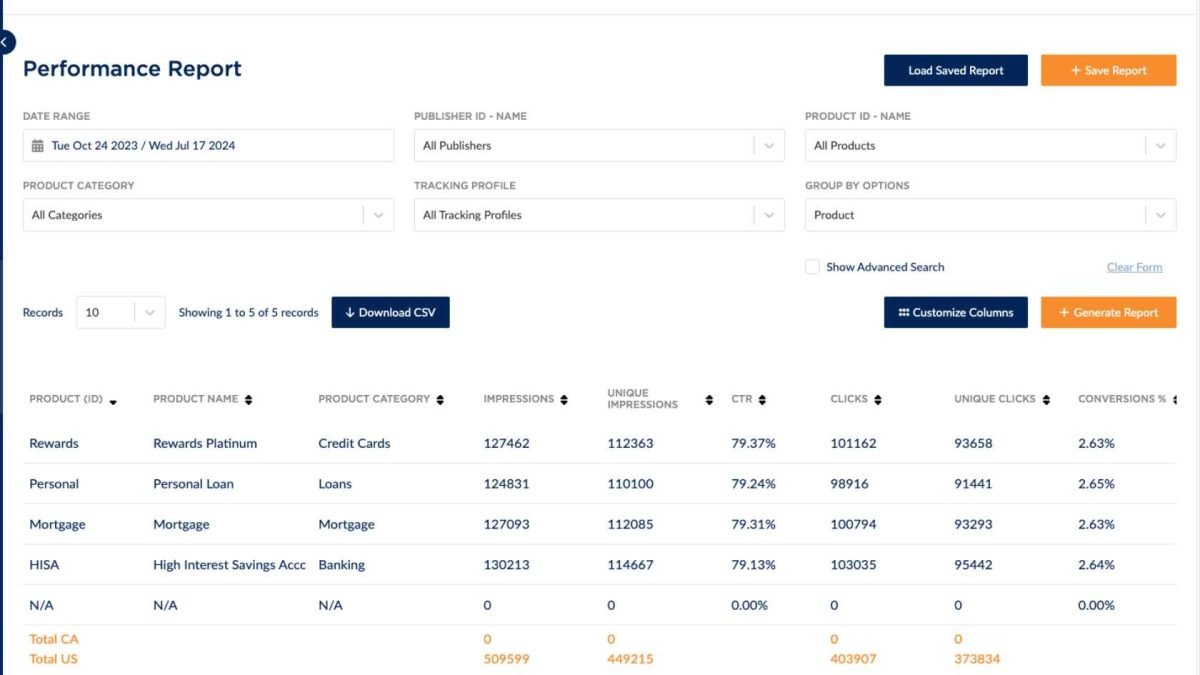
Work with your publishers to exchange data for a better understanding of impressions, views, and referrals and use an affiliate marketing tracking tool. Compare this data against your baseline. An uplift can mean that affiliate content is not only driving direct traffic but also enhancing overall search visibility.
- Measure organic search rankings and affiliate article placements for key terms.
Track how affiliate-generated content—whether blog posts, product reviews, or videos—is affecting your search presence. For instance, if a blogger’s article on Best Financial Apps (where they showcase your product) begins ranking on the first page for a high-intent search term, that’s a strong indicator of the halo effect.
- Track user journeys.
Trace the multiple touchpoints of a user’s journey from initiated click-through to last click. This can help you see if users have been influenced by and converted after engaging with any affiliate-generated content.
- Monitor branded search increase.
Affiliate-driven awareness may be feeding your paid (and organic) brand marketing efforts, creating value that pure conversion metrics miss.
To calculate this “discounted brand awareness”, track your branded search term volumes before and after launching affiliate campaigns. An increase in branded searches following affiliate program activity indicates a positive halo effect, as prospects influenced by affiliate content may later search directly for your brand.
Even when an opportunity, campaign, or publisher has a higher than desired CAC or isn’t ROI positive from a conversion perspective, affiliate content can nurture and boost your paid and organic marketing efforts.
Once you have an idea of how to measure your program’s halo effect, here are tried-and-tested ways to maximize its benefits.
3 ways to nurture the brand halo effect with your affiliate program
Here are a few partnership marketing tactics we’ve seen our financial clients use to maximize their marketing spend and nurture a brand halo effect.
1. Diversify partners to expand your brand’s reach
Having a diverse mix of affiliate partners is an important part of creating a brand halo.
Various partners take different angles and use different methods to speak to a diverse mix of potential customers. Since it takes multiple touchpoints for someone to convert, the more exposure they have to your brand via multiple sources the more likely they’ll be ready to buy when they see another type of promotion.
For example, if you’re selling retirement accounts to millennials, one blogger may reach them through SEO content marketing, an influencer through a TikTok video, and a publication via a comparison chart.
Consider adding reputable financial influencers, vloggers, bloggers, podcasters, and both large and small publishers to your affiliate marketing strategy. Each of these partners will have built a trusting relationship with their audience, making their endorsements powerful even if they have a smaller reach.
An array of partners also puts you in the conversations that mention your competitors.
An example we’ve seen of building a halo effect via affiliates is a bank that wanted to drive growth and increase its company profile, but didn’t have the budget to run campaigns with top publishers.
Instead, the bank:
- Created relationships with longtail publishers that were a great fit for its high-yield savings account, many of whom were already showcasing their competitors.
- Gained credibility and traction from this approach.
- The ‘free’ exposure from a wider range of longtail publishers allowed the bank to collect conversion rate data and created a product buzz that allowed them to reopen conversations with larger publishers.
The affiliate approach to creating a halo effect can even extend to organic search results. Imagine a blogger partner ranks for Best travel rewards cards and features your product in their article. The cumulative effect is expanding your reach not just with potential customers but with future partners, helping to create a positive brand image within the market.
The exposure and endorsements you get increase your credibility and your company’s profile, especially when they are from major publishers.
2. Go beyond lower-funnel partnership tactics to nurture credibility
To achieve a brand halo effect, go beyond traditional performance-based campaigns that target a ready-to-buy audience. Explore other types of campaigns further up the funnel that use different content mediums, not just link placements.
These include:
- Media placements
- Newsletter features
- Takeover campaigns
- Paid ads
- Organic search
- Social media tactics
You can even experiment with different payment and attribution models, which can open up new partnership opportunities with your affiliates.
Incorporating tactics that reach customers higher up the funnel means you get more brand awareness and product education, and can capture more of your market.
One example is a bank that was using a new email tactic. They implemented a geo-targeted newsletter, with the primary goal of improving net-new account growth. They reached that target and increased new accounts by 650% from Q1 to Q4.
This affiliate strategy also accomplished:
- Better rankings on publishers’ marketplaces, putting their product top of mind and on par with major competitors
- Capturing more audience attention by coordinating their email campaign content with publishers’ content
- Gaining more visibility with sidebar advertisements, to increase recognition
The CPA and immediate success of this bank’s affiliate campaign don’t tell the full story. While affiliates drive directly measurable conversions, they also influence potential customers earlier in the decision-making process. Many of these people may not convert right away and get attributed to the affiliates’ efforts, but could become customers weeks or even months after the campaign has ended.
See how Coast Capital increased net new accounts with affiliate marketing. Read the case study.
3. Use partnerships to reinforce the power of product launches and company press mentions
Affiliate marketers can coordinate partnership marketing campaigns to boost the effects (and effectiveness) of other channels by promoting milestones, like industry award wins or important leadership hires. This can create a virtuous cycle, with more coverage and boosted exposure across all marketing efforts.
One strategy is an embargoed affiliate release, where key partners get exclusive coverage of a product at launch. These partners make their content live at the same time as a product debut.
We’ve seen this work when a national bank chose an influencer to help with a new card release. The influencer signed an NDA and got early access to product details, so they could craft an article around it. The influencer’s article went live on the same day the product launched. When searchers looked for more information, there was already a reputable source covering the bank’s new offering—with a call-to-action to encourage sign-ups (unlike traditional PR).
This was a win-win-win:
- The influencer was a go-to source for customers, making the product coverage a lucrative page on their site.
- The bank’s affiliate link drove signups starting from the day the product launched.
- Because the influencer’s site ranked in the search results, brand awareness and credibility rose in the bank’s new product category, without the bank investing more in SEO.
These campaigns can increase the share of voice around a new product and extend the reach of a product launch beyond PR. Affiliates working in unison with other digital marketing campaigns is a powerful way to create the halo effect.
Discover the power of nontraditional partnerships to boost your affiliate marketing efforts
How one credit card issuer realized the strength of their halo effect by turning off the affiliate channel temporarily
A major publisher in our affiliate network was working with a large credit card issuer that was having trouble justifying what they felt was a high cost for the publisher’s campaign. Our publisher knew the issuer was looking at marketing spend solely from a CPA perspective, which can hide the holistic value their marketing efforts were creating for the brand.
So, the publisher offered to turn off their campaigns temporarily so the card issuer could quantify the influence they had on the issuer’s digital marketing as a whole. When they paused campaigns for just two weeks, the card issuer saw the cost of their other initiatives increase across the board.
The spend for their campaigns with this affiliate made such a big difference to the efficiency of their entire digital marketing strategy that it more than justified the expense. The publisher’s work not only brought in new customers, the halo effect it created lifted results for their entire media mix.
This gave the card issuer clear proof that the effect of an affiliate strategy goes far beyond CPA for net-new customers brought in by the channel.
What to keep in mind when using partnership marketing to achieve a brand halo effect
Working with affiliates to create a brand halo takes time and resources. When discussing this possibility with your leadership team, keep in mind the following:
- As with all affiliate marketing, you will not see the full potential of the channel if your product isn’t competitive. The right product will attract the right partners and get results.
- Existing customers may come through affiliates in your brand halo ecosystem. These customers may not have known about your product––even if you’ve been trying to upsell them. If the cost of converting existing customers is a concern, consider proposing a pay structure that differentiates between new and current customers.
- Publishers have editorial freedom, and may be brutally honest, with less than flattering reviews. However, this gives your brand more credibility because consumers trust opinions and endorsements from honest publishers. These customers come in knowing the pros and cons of your offering and can be more likely to stay in your ecosystem.
Like all marketing strategies, there are highs and lows to the affiliate channel. We’ve found it’s a great option to help fintechs meet acquisition goals as well as improve market share and awareness. But when does it make sense to use affiliates to create a halo effect for your firm?
When it makes sense to aim for the halo effect
Who would most benefit from using the affiliate channel to create a brand halo? It could make sense for you if:
- You have the budget to invest in an affiliate channel, as many publishers want to work with brands that can offer market rates and long-term commitments.
- You have a strong digital marketing presence already, as the affiliate channel works best with other channels and campaigns.
- Your top marketing goals include building credibility, brand and product awareness, and educating consumers.
- You want to increase the efficiency of your digital marketing, and are looking to improve results across channels.
- You have competitive products, which will make it easier to place campaigns with the right publishers.
Overall, we see the best results from the affiliate channel with our clients who are ready to commit to affiliates and invested in growing long-term relationships with partners.
Build your brand halo with affiliate marketing
For financial services companies, the brand halo effect that affiliate marketing creates can be hugely valuable while at the same time difficult to measure.
When trying to sell the channel internally to stakeholders who may see working with certain partners as cost-prohibitive, it is important to look at the wider value they create—from brand credibility, enhanced visibility, and even lift in results via your owned channels. And this is all alongside affiliates’ role in driving net-new customer acquisition.
If you are a financial services company in North America who wants to explore the brand halo effect via affiliates, contact Fintel Connect today.



 English
  Français