
Marketing Channels: Choosing The Right Mix To Control CPA
Shagun Mehta
- Last Updated: May 5, 2026
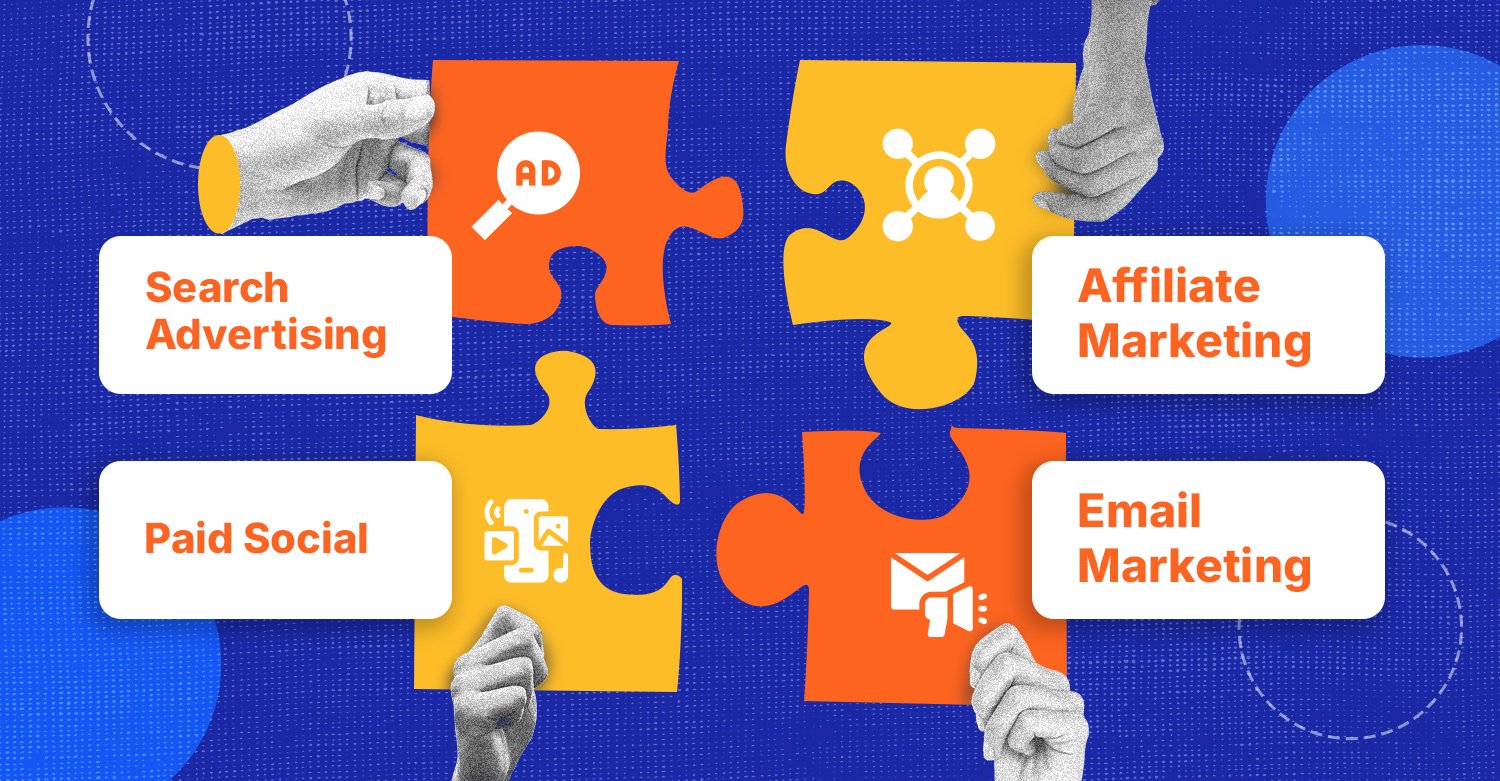
As a financial services marketer, you know that acquisition costs can make or break your strategy. With competition increasing, consumer behavior evolving, and budgets tightening, the key to success in 2025 will be in optimizing your channel mix.
But how do you determine which digital channels provide the best balance between cost and performance? More importantly, how can you leverage performance-driven strategies to ensure your financial products stand out?
To stay competitive and drive sustainable growth, financial marketers need to understand:
- How different channels cost per acquisition (CPA)
- Which channels are most effective for high-intent customer acquisition
- How to leverage a performance-driven model to optimize marketing spend
In this guide, we’ll break down the role each major acquisition channel plays, how they affect CPA, and how you can use affiliate marketing as a strategic lever to maintain cost efficiency while scaling your customer base.
We’ll cover:
- The role each digital channel plays in acquisition and CPA
- How financial brands can optimize their marketing mix for efficiency
- How affiliate marketing drives scalable and performance-based customer acquisition
If you are a financial services company in North America looking to improve acquisition through affiliate marketing in 2025, contact us to see how Fintel Connect can help.
Whether you’re refining an existing strategy or launching new campaigns, this resource will help you make data-driven decisions that drive results.
Not all digital channels are created equal—but each has a role to play in your acquisition strategy. The key is knowing when and how to use them to balance cost and performance. With competition intensifying, customer behaviors shifting, and budgets tightening, finding the right channel mix is essential to keeping your CPA in check while maximizing ROI. Here’s how to approach it strategically.
Each channel plays a distinct role in the acquisition funnel, and understanding how they impact CPA can help you refine your strategy for cost-effective growth.
Role of Each Channel & What It Means for Your CPAs
1. Search Advertising
Audience Intent: High
Search advertising connects with users actively searching for financial products, making it one of the strongest channels for high-intent audiences. These users are typically in the final stages of their decision-making process, leading to high conversion potential.
Competitiveness: Very High
Financial services are among the most competitive industries in search advertising. Due to the high number of advertisers bidding for visibility, CPCs for keywords like “best high-yield savings accounts” or “low-interest credit cards” can reach double digits.
CPA: High
Because of the competitive nature of search, CPAs can be high. However, the high-intent audience makes search a valuable channel for financial products with strong lifetime value.
Pro Tip: To reduce CPAs in search, financial brands should refine keyword targeting, optimize ad copy, and leverage negative keywords to eliminate unqualified clicks. Retargeting techniques can also help by re-engaging users who previously visited your site, increasing conversion rates.
2. Paid Social
Audience Intent: Low to Medium
Paid social helps build brand awareness and generate leads but typically doesn’t capture high-intent customers the way search does. While platforms like Facebook and LinkedIn offer detailed targeting, conversions often require additional nurturing.
Competitiveness: Moderate
With strong audience segmentation, paid social can be an effective channel for engaging potential customers at the research stage. However, social media users tend to engage out of curiosity rather than intent to convert immediately.
CPA: Moderate
CPAs can be lower than search, but because conversion intent is lower, financial brands must factor in additional nurturing efforts, such as retargeting and email follow-ups.
Pro Tip: A/B test different ad creatives and messaging to identify what resonates most with your audience. Incorporating predictive analytics into your paid social strategy can improve efficiency by using data to refine audience segmentation and optimize ad spend.
3. Affiliate Marketing (A Performance-Driven, Scalable Channel)
Audience Intent: High
Affiliate marketing taps into high-intent consumers researching financial products. Publishers—such as personal finance bloggers, credit card comparison websites, and financial influencers—help connect brands with users actively looking for information before making a financial decision.
Competitiveness: Moderate
The affiliate space is competitive, but it offers advantages over other channels. Unlike paid search or social, where costs can fluctuate based on bidding wars, affiliate marketing operates on a performance-based model, meaning brands only pay for actual conversions.
CPA: Moderate to High (But Controllable)
Because affiliates are paid per action, rather than per click or impression, it provides cost predictability. However, success depends on cultivating strong publisher relationships and ensuring that partners are delivering high-quality traffic.
Pro Tip: Diversify your affiliate partners to ensure a mix of comparison sites, blogs, and influencers, optimizing CPA while expanding reach. Partnering with trusted finance publishers not only improves CPA efficiency but also boosts brand credibility among consumers.
Want to see how leading financial brands are optimizing acquisition through affiliate marketing? Get our CPA Benchmark Report.
Why Financial Services Brands Rely on Affiliate Marketing
A balanced acquisition strategy incorporates multiple channels, but affiliate marketing for customer acquisition plays a unique role in controlling CPA. Here’s how financial brands can maximize affiliate marketing’s impact:
- Pay-for-Performance: Unlike search or social, where costs are incurred regardless of performance, affiliate marketing ensures brands only pay for conversions.
- Brand Credibility: Trusted finance sites and influencers lend credibility to your products, influencing customer trust and purchase decisions.
- Scalability: With the right mix of publishers, financial brands can expand their reach without the high upfront costs of other channels.
- Flexibility in Compensation Models: Financial brands can use CPA, revenue share, or hybrid models to optimize acquisition costs and partner incentives.
4. Email Marketing
Audience Intent: Low to Medium
Email marketing is a strong retention and upsell channel but requires a well-maintained list and compelling messaging to convert leads. While it’s less effective for cold acquisition, personalized email campaigns can improve engagement and lifetime value.
Competitiveness: Low
Email marketing isn’t subject to the auction dynamics of search or social, making it a cost-effective tool when executed strategically.
CPA: Low to Moderate
Sending emails to an owned audience is highly cost-effective. However, rented email lists or third-party sends may be pricier and less effective.
Pro Tip: Personalization and segmentation are key—use dynamic content and behavioral triggers to improve open and conversion rates. Audience segmentation plays a crucial role here—tailoring campaigns to specific demographics or behaviors leads to higher engagement and better cost efficiency.
Optimizing Your Channel Mix with Affiliate Marketing
A balanced acquisition strategy incorporates multiple channels, but affiliate marketing plays a unique role in controlling CPA. Here’s how financial brands can maximize affiliate marketing’s impact:
1. Partner with High-Quality Affiliates
Not all affiliates are created equal. Focus on securing partnerships with:
- Comparison sites (NerdWallet, Finder, Credit Karma)
- Niche finance blogs with engaged, loyal audiences
- Influencers and content creators with trusted financial expertise.
Rather than chasing sheer volume, prioritize partners that bring in high-quality, high-intent traffic to keep CPAs in check.
Want to partner with high-quality affiliates? Learn how Fintel Connect helps banks scale efficiently.
2. Align Affiliate Commissions with Performance
Many financial brands use tiered commission structures to reward top-performing affiliates. For example:
- A higher CPA payout for customers who open an account and fund it with a minimum deposit.
- A performance bonus for affiliates who maintain a conversion rate above a set threshold.
- Hybrid models that combine a smaller upfront CPA with a revenue share component.
This keeps partners motivated while ensuring marketing dollars are spent efficiently.
3. Optimize Landing Pages and Conversion Paths
Even the best traffic won’t convert if your landing pages aren’t optimized. Make sure your affiliate-driven traffic lands on:
- Dedicated pages with tailored messaging aligned to the referring affiliate’s content.
- Minimal friction application flows, reducing drop-off during sign-ups.
- Clear trust signals, such as reviews, security badges, and transparent pricing.
4. Use Data to Optimize Affiliate Campaigns
A major advantage of affiliate marketing is the ability to track conversions down to the publisher level. Regularly review:
- Conversion rates by partner to identify top performers.
- Lead quality and funding rates to ensure affiliates are driving engaged customers.
- Seasonal trends to adjust commission structures during high-demand periods.
Final Thoughts: Leveraging Affiliate Marketing to Control CPA
In financial services, managing CPA is about more than just cutting costs—it’s about investing in the right channels that drive high-quality, high-value customers. A diversified mix that balances high-intent, performance-based channels like affiliate marketing with broader awareness-building tactics can optimize acquisition costs and maximize ROI.
Want in-depth strategies on optimizing your CPA? Get the full breakdown in our comprehensive guide. Read it here!


 English
  Français