
The executive’s guide to affiliate CPA strategy for fintechs


Fintechs are often introducing a product category that doesn’t have established affiliate coverage yet, which means there’s frequently no reliable CPA benchmark to start from and no track record to point affiliates to. That’s a fundamentally different starting position than a bank or credit union optimizing an existing program, and it calls for a different playbook: building market understanding first, negotiating flexible payout structures, and treating comparison sites as a later-stage goal rather than a starting point.
This guide applies the core CPA framework from our 2026 CPA benchmark and strategy report specifically to what fintechs need to get right.
What makes CPA strategy different for fintechs?
A fintech introducing a new product, or a new category entirely, is starting from a different position than an established institution optimizing an existing affiliate program:
- Affiliates need proof before they’ll commit to CPA. Without conversion history, many affiliates are hesitant to work on a pure CPA basis for an unproven product. A hybrid structure, cost-per-lead for initial applications, stepping up to CPA for funded accounts or approved policies, is often the realistic starting point.
- Long-tail and niche affiliates come before comparison sites. Tier 1 comparison sites want proven performance data before granting placement. For a genuinely new category, building content and market understanding with smaller, willing affiliates usually has to happen first.
- Willingness to test pays off disproportionately. Fintechs typically have more flexibility to experiment with campaign structures and target CPA than larger institutions, and that flexibility is often exactly what convinces early affiliates to take a chance on an unproven category.
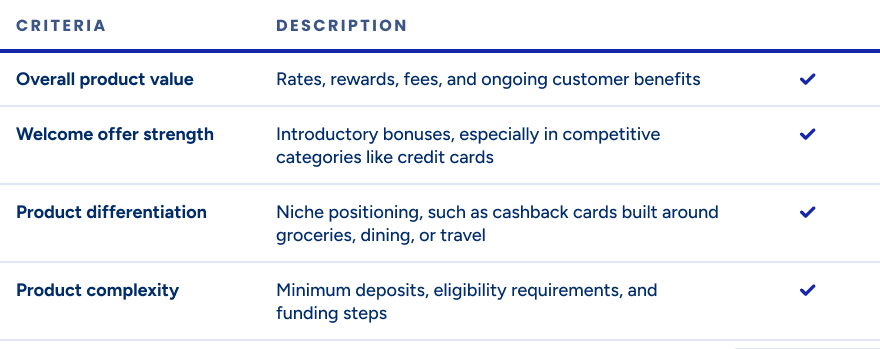
What are realistic CPA benchmarks for fintech-relevant products?
Based on Fintel Connect’s 2026 CPA Benchmarking Report, here’s where the market sits for products most relevant to fintechs in the US:
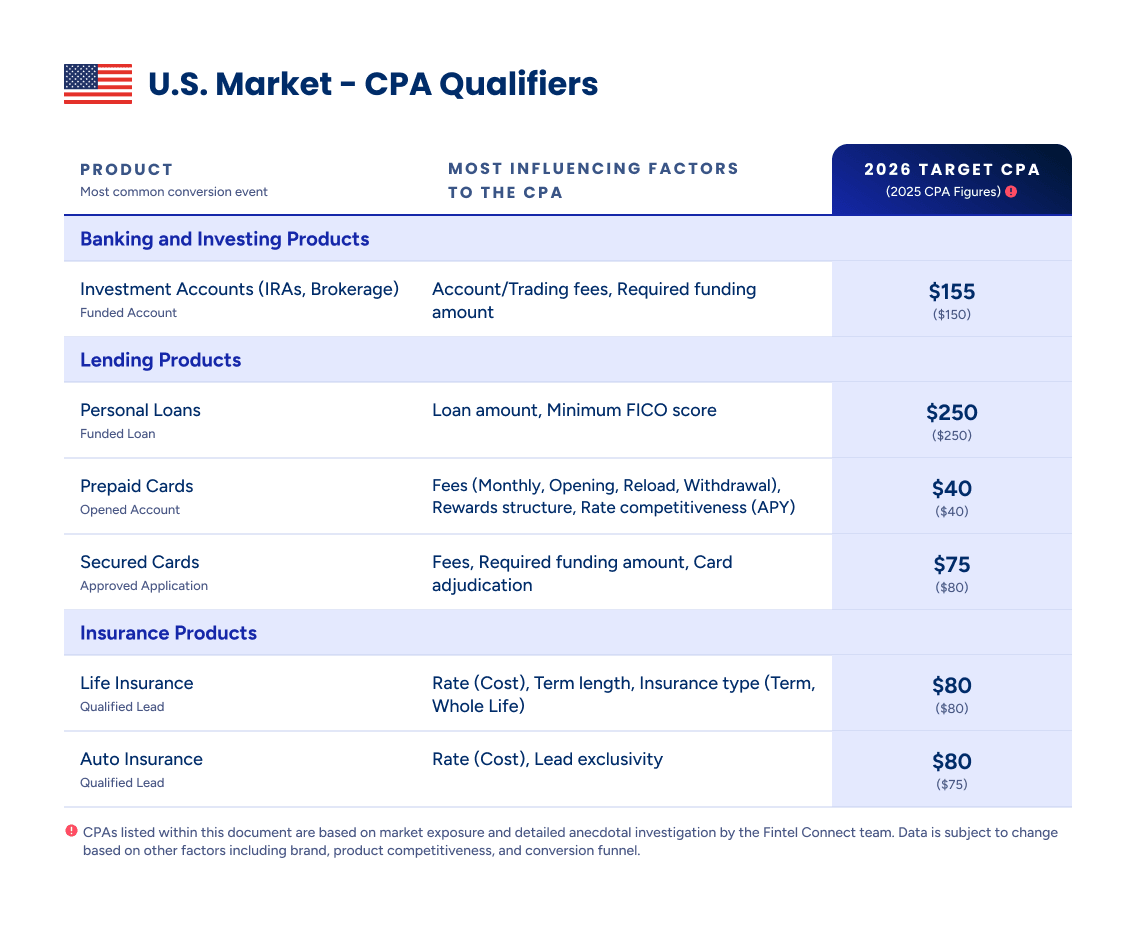
- Investment accounts (IRAs, brokerage): $155 (funded account)
- Personal loans: $250 (funded loan)
- Prepaid cards: $40 (opened account)
- Secured credit cards: $75 (approved application)
- Life insurance: $80 (qualified lead)
- Auto insurance: $80 (qualified lead)
If your product doesn’t map cleanly to any of these categories because it’s genuinely new, treat these as the closest available reference point rather than a direct benchmark, and expect your actual CPA to be shaped more by negotiation with early affiliates than by market precedent.
These figures are directional, not fixed. For the full breakdown by product and conversion event, including Canadian benchmarks, see the complete 2026 CPA benchmarking report.
What’s the biggest CPA mistake fintechs make?
Of the five common CPA mistakes covered in our Executive’s Guide to Affiliate CPA Strategy, the one that hits fintechs hardest is setting CPA targets without affiliate input, usually because there’s no internal precedent to work from, so the target gets set based on internal budget assumptions rather than what the market will actually support.
This shows up in a specific way for fintechs: a brand-new product launches with a CPA based on what similar-sounding categories seem to pay, but affiliates in the actual space see the offer differently, based on real conversion data, competing products, and how much explanation the product needs, and the program struggles to gain traction as a result.
Best practice: before setting a target, talk to a handful of affiliates who work in adjacent categories. Their read on realistic conversion rates and payout expectations will almost always be more accurate than an internal estimate for a product with no track record.
The other four mistakes, prioritizing low CPA over customer value, adjusting targets too quickly, using higher CPAs to mask a weak product, and launching with an unsustainably high CPA, apply to fintechs too. See the full breakdown of all five mistakes in our pillar guide.
How should fintechs diagnose a CPA problem?
Before adjusting CPA, ask one question: is the problem commercial, or is it structural?
- Commercial: Your product converts well in early testing, but affiliates in the space aren’t picking it up yet. The fix is likely a more flexible payout structure or more affiliate education, not a higher flat CPA.
- Structural: Your onboarding flow has strong early interest, but users are abandoning during a lengthy verification or funding step. No CPA increase will fix that. Fix the funnel first.
For a genuinely new category, it’s worth running this diagnostic earlier and more often than an established institution would, since you won’t have months of stable data to fall back on.
Case study: how PolicyMe built a new product category through affiliates
When PolicyMe launched its term life insurance offering, there was almost no established affiliate coverage for the category in the Canadian market. Rather than wait for the market to catch up, Fintel Connect helped PolicyMe build it from the ground up:
Activated existing partners to start covering term life insurance, creating content and market interest where little existed
Engaged long-tail and niche affiliates to test new placements and formats, including hosted tools and widgets for high-intent audiences
Leaned on PolicyMe’s willingness to test campaign structures and adjust target CPA, which unlocked interest from affiliate partners, eventually including premium placement on Finder.com
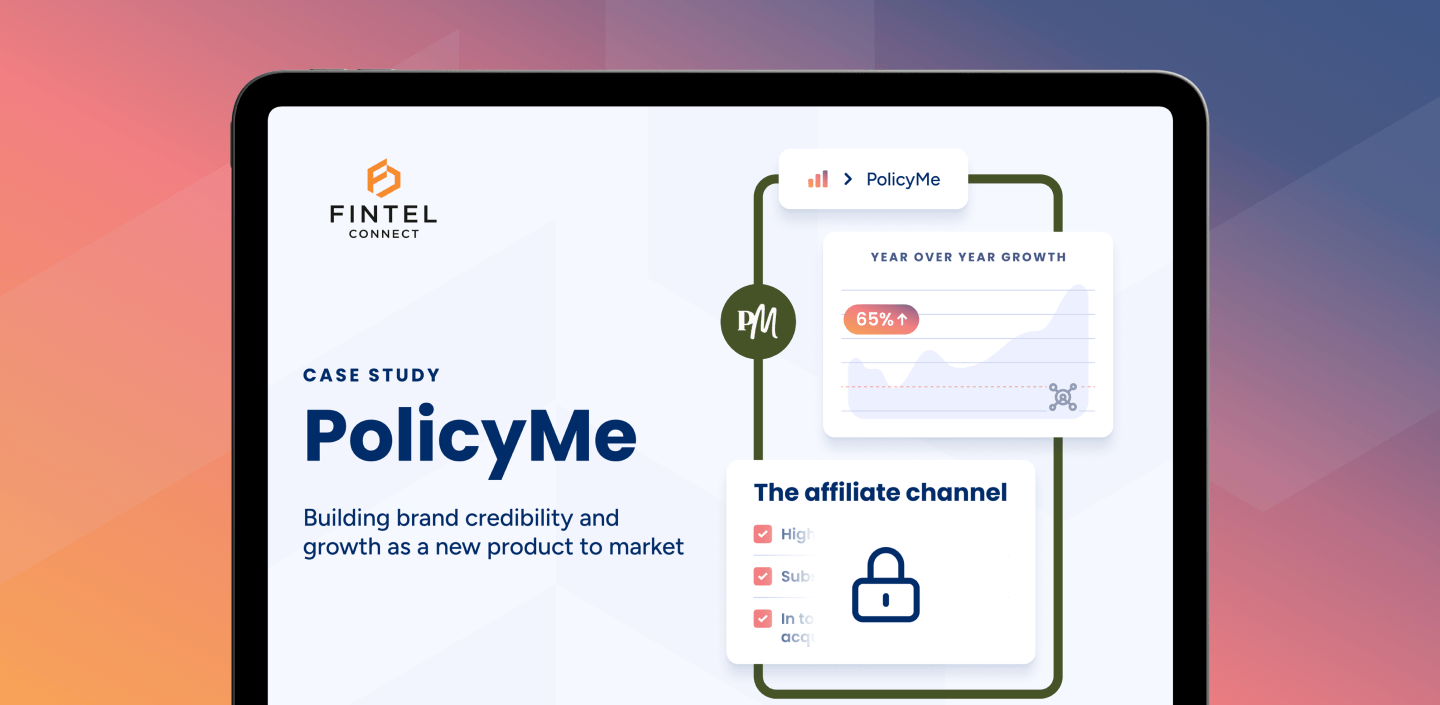
The result: a 65% year-over-year increase in submitted applications, and affiliate marketing became one of PolicyMe’s top four growth channels.
What should fintech marketing leaders prioritize now?
- Start with a hybrid payout structure. A cost-per-lead rate for initial applications, stepping up to CPA for funded accounts or approved policies, is often the realistic way to get early affiliates on board for an unproven product.
- Recruit long-tail and niche affiliates deliberately. Don’t wait for tier 1 comparison sites to notice you. Build the content and conversion data with smaller partners first, then use that track record to earn premium placements later.
- Stay flexible on campaign structure. Willingness to test and adjust target CPA is one of the few genuine advantages a fintech has over a larger, more process-bound institution. Use it.
Questions fréquemment posées
What’s a good CPA for a new fintech product with no market precedent?
There isn’t a reliable benchmark for a genuinely new category. The more useful approach is starting with a hybrid cost-per-lead and CPA structure, then adjusting based on real conversion data and direct affiliate feedback rather than an internal estimate.
Why won’t affiliates work with fintechs on a pure CPA basis right away?
Many affiliates are cautious about committing to CPA for products without a conversion track record, since they’re taking on the risk of unproven performance. A hybrid structure that pays for leads initially, then shifts to CPA once conversion data exists, is often the more realistic starting point.
Should a fintech try to get featured on major comparison sites right away?
Usually not as a first step. Tier 1 comparison sites typically want proven conversion data before granting placement, so building traction with long-tail and niche affiliates first is often the faster path to eventually earning that premium placement.
How much flexibility should a fintech build into its CPA strategy?
More than an established institution typically would. Willingness to test different campaign structures and adjust target CPA based on early results is one of the main ways fintechs successfully unlock affiliate interest in an unproven category.



 Français
  English